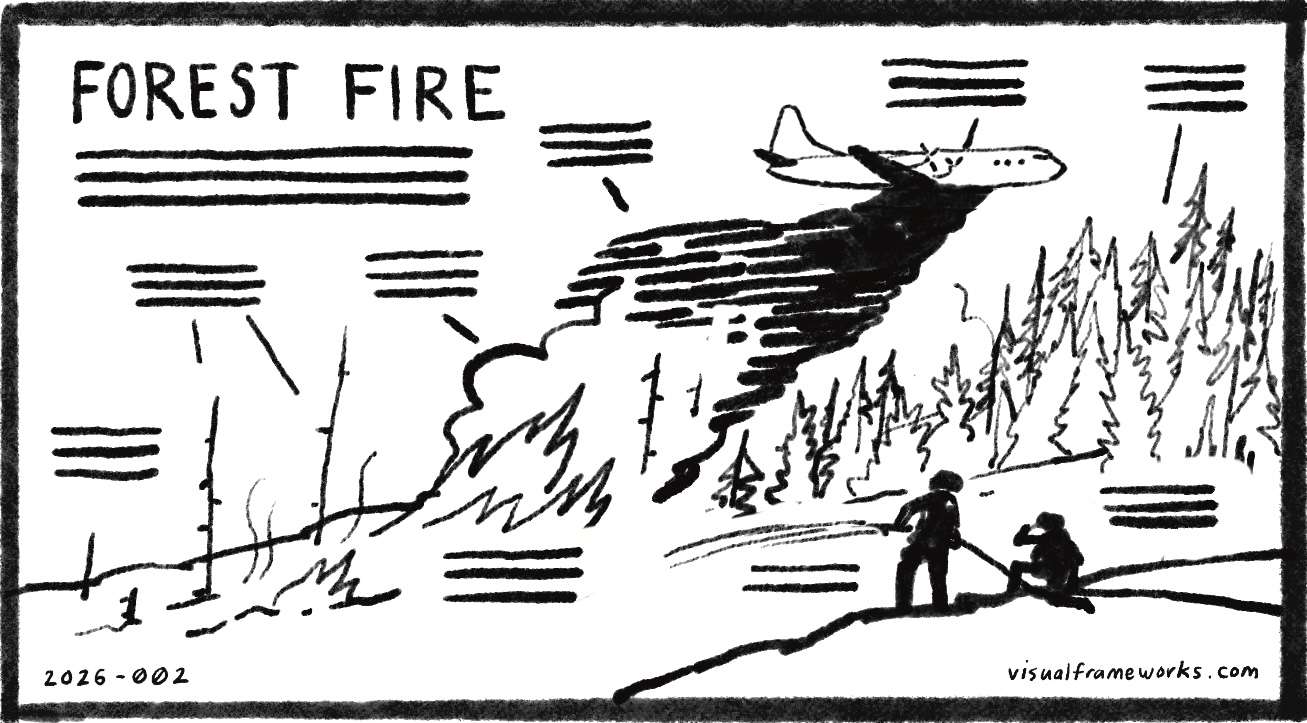
A forest fire moves through a landscape in phases. Fuel accumulates over years: dry leaves, fallen branches, the dense undergrowth that builds in the shade. When a spark flares, the fire does what fire does: it consumes what has built up, releases what has been locked inside the wood, opens the canopy to the sky. The ground left behind is blackened and bare. The soil is also, suddenly, rich.
Ecologists have a name for this: a fire regime. Some ecosystems don’t just tolerate fire, they depend on it. Without periodic burning, accumulation becomes so dense that when fire finally arrives it burns hotter and more completely than it would have otherwise. Suppression increases risk. And after the burn, seeds that needed heat to split their casings begin to germinate. Species that couldn’t survive in the shade come back. The forest that grows is not the same forest. It is often more alive.
What has been accumulating in your situation, quietly, for longer than you’ve acknowledged? Is the fire you’re facing destroying something essential, or clearing something that had become too dense to see through? Are you actively fighting the fire, or watching from the hillside? What couldn’t establish itself in the crowded system that now has light and open ground? Where is new growth already beginning?
See also: Tipping Point, Doom Loop, Snowball Effect, Seasons, Sedimentary Layers, Subduction, Growth, Virtuous Cycle.
2026-002